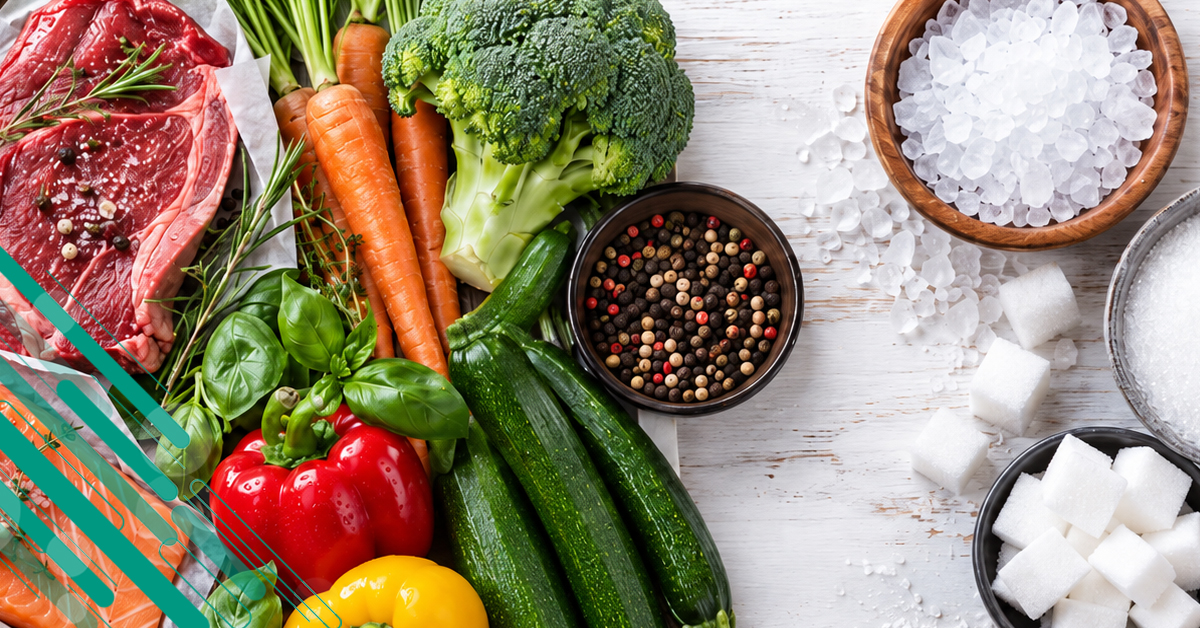
Temperature is not the only lever available. To grow and multiply, microorganisms also need water. More precisely, what matters is the amount of water actually available, expressed through the concept of water activity. Two foods can contain similar amounts of water and behave very differently. Part of the water may in fact be bound to other components and therefore not be available in the same way to microorganisms and chemical reactions. This is why, in preservation, the total amount of water tells only part of the story.
Drying acts precisely on this balance. By removing a significant part of the water, conditions are created in which microbial growth becomes more difficult or, below certain thresholds, impossible. It is one of the oldest preservation methods, but the principle remains central in modern industrial production as well. What mainly changes are the techniques used. Water can be removed by circulating hot air, through vacuum systems or with more complex processes. In freeze-drying, for example, the product is first frozen and then placed under conditions that allow the ice to pass directly into vapour. The result is a food with a very low amount of available water, capable in many cases of keeping for a long time and of recovering some of its characteristics through rehydration. Concentration also reduces the amount of water relative to the other components. Juices, purées, extracts and other products can be concentrated to obtain specific technological characteristics and greater stability. Once again, however, water reduction may be only one of the barriers used: depending on the product, a heat treatment, a certain level of acidity or specific packaging conditions may also be required.
Another approach is to act on the air surrounding the food. With vacuum packaging, most of the air inside the package is removed. By reducing oxygen, oxidative phenomena can be slowed down and the growth of some aerobic microorganisms can be limited. This does not mean making the product immune to spoilage: some microorganisms do not need oxygen, and vacuum packaging must be managed together with the other safety parameters required for that specific food.
Modified atmosphere packaging takes this one step further. The air inside the package is replaced or modified using gas mixtures, generally based on carbon dioxide, nitrogen and, when necessary, oxygen. Composition and proportions vary depending on the product: what works for fresh meat is not necessarily suitable for vegetables, cheese or baked goods.
The aim may be to slow the growth of certain microorganisms, limit oxidation or control physiological processes such as respiration and ripening in vegetables. Modified atmosphere packaging does not, however, automatically replace temperature control: for many products, the two techniques work together.